Another article about centering in CSS
The tired old meme that centering in CSS is “impossible” has never been so irrelevant. In fact, I’d argue there’s almost too many options now.
To get videos working just right in Figma Buzz, Product Designer Natasha Tenggoro used Figma Make to prototype complex ideas when words alone fell short. We show three of them here, prompts and all.
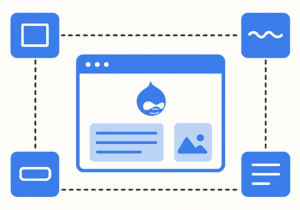
Component-based design (CBD) is a cornerstone in building scalable, maintainable, and efficient modern websites. It’s a transformative methodology that aligns with Drupal’s modular architecture and positions Drupal theming philosophy amongst the most recent best practices in architecting user interfaces.
If you are new to using AI in design or curious about integrating AI into your UX process without losing your human touch, this article offers a grounded, day-by-day look at introducing AI into your design workflow.
Paired with MCP servers, design systems become a productivity coefficient for AI-powered workflows, ensuring that AI agents produce output that’s relevant and on brand.
We sent these questions to 913 design system nerds and received 57 responses. After reviewing the data, we saw a story forming…one of awkward spreadsheets, elegant code instrumentation, a bit of organizational fear, and, ultimately, some pretty cool opportunities.
Current AI interfaces lull us into thinking we’re talking to something that can make meaningful judgments about what’s valuable. We’re not — we’re using tools that are tremendously powerful but nonetheless can’t do “meaningmaking” work (the work of deciding what matters, what’s worth pursuing).
Many teams believe that meeting WCAG standards means their digital products are compliant with the European Accessibility Act (EAA). Using a clear comparison grounded in EN 301 549 and EN 17161, we extensively detail what’s in and out of scope—and why organizations need to operationalize accessibility like they do privacy and security.
When two creatives collaborate, the design process becomes a shared stage — each bringing their own strengths, perspectives, and instincts. This project united designer/art director Artem Shcherban and 3D/motion designer Andrew Moskvin to help New York–based scenographer and costume designer Christian Fleming completely reimagine how his work is presented.
Lately, as I continue working on adaptive design for the Material system at Google, I’m noticing an intersection between adaptive thinking and generative AI discourse. I think the “create-anythingness” generative AI appears to possess has renewed the impulse to make the interface ultimately adaptable, customizable, and individual.