
Radix UI vs Base UI
Modern frontend development has shifted heavily toward custom design systems. Teams no longer want off-the-shelf UI kits that dictate colors, spacing, and layout. Instead, they want full control over styling while still getting:

Modern frontend development has shifted heavily toward custom design systems. Teams no longer want off-the-shelf UI kits that dictate colors, spacing, and layout. Instead, they want full control over styling while still getting:

Claude Sonnet 4.6 is our most capable Sonnet model yet. It’s a full upgrade of the model’s skills across coding, computer use, long-context reasoning, agent planning, knowledge work, and design. Sonnet 4.6 also features a 1M token context window in beta.
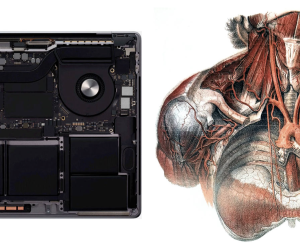
When I was reading Richard Dawkins about evolution, one example stuck with me: the giraffe’s laryngeal nerve. It connects the larynx to the brain, but in a giraffe it runs all the way down the long neck, loops around the aorta, and then comes back up. Logically, it should run straight from the head to the larynx. But the giraffe evolved from a short-necked ancestor that already had this loop around the aorta. As the neck grew, the nerve simply stretched.

AI agents generate 98% more PRs but reviews take 91% longer. The work didn’t disappear — it moved. A synthesis of eight perspectives on where it actually went.
As an aside, I received a lot of positive feedback on that essay, thank you! (And I’m sorry that I still haven’t responded to some of you. My inbox is a disaster for a variety of reasons.) The wild thing is that I received zero negative feedback. My pet theory is that it was simply too long and nuanced for casual drive-by critics and that anyone who stuck with it did so…
Making software used to be easy. Well, easier. Twenty years ago, desktop software was software. 99.999% of that used a mouse, keyboard, and monitor. Most were web-based–using plain HTML, CSS, and a (relative) sprinkle of Javascript. Frameworks existed, but there were less of them. Was it limiting? Oh, yeah–to the point of claustrophobia.
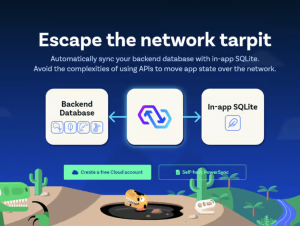
If you are still debating “Optimistic UI” versus “Loading Spinners” in 2026, you are fighting the last war. The paradigm has shifted. We aren’t just building offline-capable apps anymore; we are building Local-First apps where the client is the source of truth and the cloud is just for backup and collaboration.

Build a smooth horizontal parallax gallery in DOM/CSS/JS, then upgrade it to GPU-powered WebGL (Three.js) with shaders.
What makes streaks so powerful and addictive? To design them well, you need to understand how they align with human psychology. Victor Ayomipo breaks down the UX and design principles behind effective streak systems.

But in my early career, I worked as a full-stack developer and designer at creative agencies. Back then, we called it being a “webmaster.” You did everything: design, frontend, backend, deployments, the whole stack.