
Who Owns Your Design System?
Maintaining a design system is a significant task, and how you structure the team that does that work may be helping or hurting your cause.
Maintaining a design system is a significant task, and how you structure the team that does that work may be helping or hurting your cause.
Streaming UIs are an easy concept on the surface, but are quite complicated in practice. There are many considerations that need to be accounted for, from layout shifts and motion preferences to proper markup and various states, that may not be instantly obvious. What happens if the stream is interrupted? Can users tab through the UI on the keyboard as it shifts? What ARIA attributes might be needed? Those are…
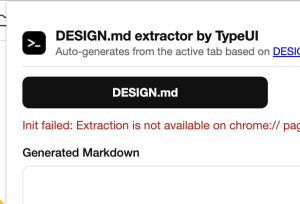
The creator of Flowbite built a Chrome extension that helps you extract styles from any website and generate DESIGN(.)md or SKILL(.)md files
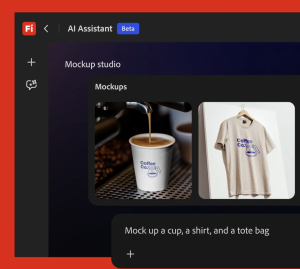
Agentic technology — AI that can make decisions, carry out complex tasks and work autonomously — is sparking a familiar debate that’s rekindled each time we meet a transformative technology. From the printing press and the camera to the personal computer and digital imaging software, the questions are different but the controversy is always the same: will new technology serve people or replace them? Artists always answer these questions by…
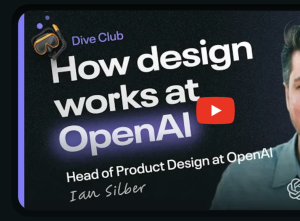
If you’re like me you gotta be curious… what’s it like designing at OpenAI?

We spent two decades mastering interfaces. We learned how to map workflows, how to communicate intent, how to shape interactions through layout and information hierarchy. The UI really was the ground truth of user experience and I have loved this space. Now, AI changes all of that. We’re moving into a reality where software has agency.

Last week, one of our developers was building a warning message. She noticed the color contrast looked off. She could have done what developers do all the time in that situation: swap the token, hardcode a value that looks right, avoid the back-and-forth over something that simple. Ship it and move on.
This article explores my learning process in scaffolding an agentic design system IDE workspace using AI skills, MCPs and Figma. With Google’s Antigravity I did setup a mix of workflows in order to generate code from design as well as design from code.
There’s a lot of rumors of a big impending UI redesign from Apple. Let’s imagine what’s (or what could be) next for the design of iPhones, Macs and iPads.
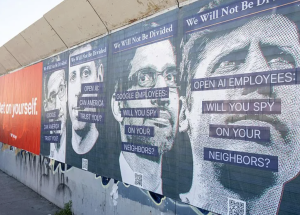
OpenAI has been all over the news recently, whether that news is about acquisitions, competition with Anthropic, or bigger debates about AI’s impact on society.